


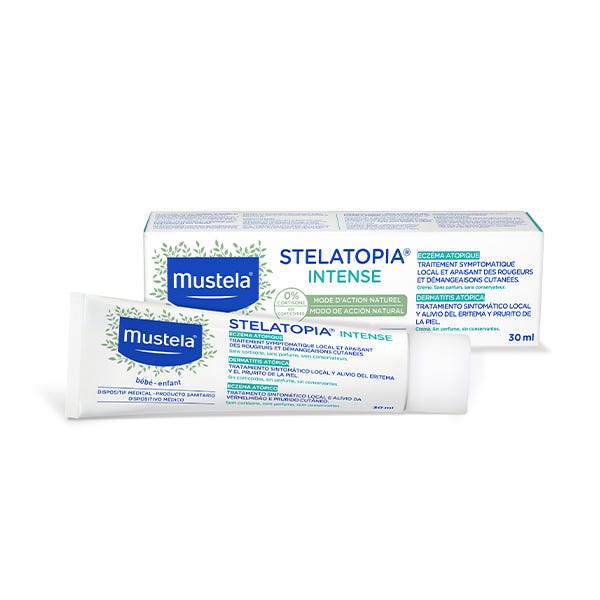

Stelatopia Intense is a medical device for the symptomatic treatment and relief of erythema and pruritus associated with atopic dermatitis and other inflammatory dermatoses.
Suitable for babies, children, and adults.
Fragrance-free, corticosteroid-free, preservative-free, and paraben-free.
It uses a 100% molecule, Ectoin®, which protects cells and helps to soothe inflammation. This cream is effective and safe as monotherapy for the treatment of mild to moderate atopic dermatitis and can be used for the symptomatic treatment of acute flare-ups. It helps reduce inflammatory reactions and facilitates the skin's regeneration process.
Manufacturer: Bitop AG. If you have any questions, consult your doctor or pharmacist. Medical Device with CE marking, pursuant to the Medical Devices Regulation.
Skin Type:
Stelatopia® Intense should be applied with a gentle massage twice a day, or as often as necessary, to the affected skin areas. If the skin condition worsens during treatment, or if it does not improve even after long-term treatment, discontinue treatment and consult your doctor or pharmacist.
Precautions for use: Keep out of reach of children. Do not apply to infected skin. For hygiene reasons, this product should not be used by more than one person. For local topical application only. This cream should not be used in cases of hypersensitivity to Ectoin or any of its components. In isolated cases, a short-lived local burning sensation may occur. In case of any undesirable effects related to its use, you should inform your doctor or pharmacist. In the absence of sufficient data, the use of Stelatopia® Intense is not recommended during pregnancy and breastfeeding.
ECTOIN, AQUA, HYDROGENATED LECITHIN, CERAMIDE-3, SQUALANE, OLEA EUROPAEA FRUIT OIL, CAPRYLIC/CAPRIC TRIGLYCERIDE, BUTYROSPERMUM PARKII BUTTER, ORYZA SATIVA (RICE) BRAN CERA, CARBOMER, XANTHAN GUM, SODIUM CARBOMER, CARDIOSPERMUM HALICACABUM FLOWER/LEAF/VINE EXTRACT, GLYCINE, ALANINE, PENTYLENE GLYCOL, BUTYLENE GLYCOL, HYDROXYETHYLCELLULOSE, GLYCERINE, HYDROXYPHENYL PROPAMIDOBENZOIC ACID.
Comment